Career Exploration
Please review each article prior to use: grade-level applicability and curricular alignment might not be obvious from the headline alone.
Canada overlooks scores of workers
4 minute read Wednesday, Jul. 22, 2026Canada has a labour shortage and a labour surplus at the same time. Canada’s labour force shortages are no longer a temporary challenge. Across the country, “help wanted” signs are everywhere.

Remains of dinosaur skull found in B.C. campground belonged to T. rex ‘great-uncle’
4 minute read Preview Monday, Aug. 10, 2026
Ethics isn’t about big scandals — it’s about little decisions made each day
5 minute read Preview Saturday, Jul. 18, 2026
Drug court helps break addiction’s bleak cycle
6 minute read Preview Saturday, Jul. 18, 2026The decline of the liberal arts
4 minute read Saturday, Jul. 18, 2026At his trial for impiety and corrupting youth, the ancient Greek philosopher Socrates defended himself by justifying his life’s work, famously maintaining that “the unexamined life is not worth living.” Lamentably, he was found guilty of the charges and ironically sentenced to death via drinking poison hemlock.
Yet human life is undeniably worth examining. So how do we best do so?
The liberal arts curriculum in Western post-secondary education — liberal as in “to be free” and art as in “learned skill” — has historically been perhaps the primary means of examining the human condition and experience, in contrast to vocational, professional or technical fields of study in universities.
Today they comprise the humanities, such as history, philosophy and literature, as well as the social sciences, such as anthropology, sociology and political science, with psychology bridging onto the natural sciences.

Winnipeg Beach vinyl boutique helps lake-goers get in the groove
9 minute read Preview Friday, Jul. 17, 2026
Black, immigrant entrepreneurs seek growth, support at summit
3 minute read Preview Thursday, Jul. 16, 2026
Long-held core values of openness, inclusion, empathy set Convalescent Home apart from the personal care home pack
19 minute read Preview Thursday, Jul. 16, 2026Management consultants and the public sector
4 minute read Thursday, Jul. 16, 2026For decades, I have sought to spice up otherwise dull speeches with quotes from Norman R. Augustine’s book Augustine’s Laws, which examined the complexities and conundrums of management and came up with 52 witty and wise laws.
Law Number XXXII reads: “Hiring consultants to conduct studies can be an excellent means of turning problems into gold, your problems into their gold.”
In recent decades, governments have made increasing use of consultants to support both policy development and operational activities. Governments could not function effectively and efficiently without the support of consultants in a wide range of areas. Reliance on consultants, however, involves risks and potential problems. In short, there is a place for consultants in the governing process and consultants should be kept in their place.
A small number of accounting and management firms — Deloitte, PricewaterhouseCoopers, KPMG, Ernst and Young and McKinsey — dominate the consulting industry on a global basis. These firms, along with numerous smaller companies, interact thousands of times annually with different parts of a sprawling public sector and deliver positive results which definitely serve the public interest.

Ottawa invests $3.5M in EMILI growth
4 minute read Preview Wednesday, Jul. 15, 2026
Manitoba firm fills merch tables
4 minute read Preview Monday, Jul. 13, 2026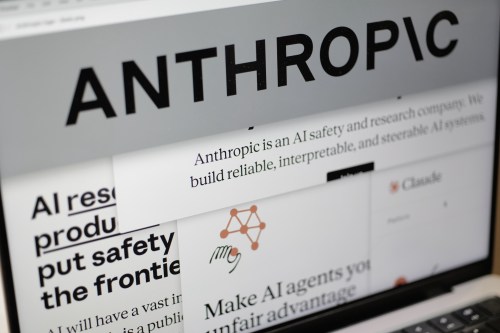
Hundreds of economists say ‘we must act now’ on AI’s economic impact and job displacement risks
2 minute read Preview Tuesday, Aug. 4, 2026
Mom spearheads fight for rehab services
4 minute read Preview Monday, Jul. 13, 2026
Pristine Roofing nears 30 years with focus on making difference
5 minute read Preview Monday, Jul. 13, 2026
‘Not a fun time’: Quebec video game industry in limbo as studios cut back
6 minute read Preview Tuesday, Jul. 14, 2026AI ownership is not security
4 minute read Saturday, Jul. 11, 2026I spent years as an investigator with the Toronto Police and watched organizations pour money into firewalls, monitoring systems and security audits to protect against cybercriminals. Breaches still happened, but we generally understood the problem. We knew what we were defending, how attacks worked and how to reduce risk.
Today, most discussion about AI security focuses on how powerful models could help attackers find software vulnerabilities or automate cyberattacks. Those concerns are real, and they deserve attention, but are only half of the story.
Far less attention is paid to the question of how we secure the AI systems themselves.
If you have used a chatbot to draft a work email, asked an AI tool to summarize a report or let your phone suggest a reply to a text message, you have relied on the judgment of a machine. Most of us have done this without thinking twice.

Saison des feux: vigilance au rural
7 minute read Preview Saturday, Jul. 11, 2026
How great managers adapt without playing favourites
6 minute read Preview Monday, Jul. 13, 2026
Province has ‘serious concerns’ with Winnipeg personal care home
5 minute read Preview Friday, Jul. 10, 2026
Applications for federal public service jobs drop by almost 30 per cent
3 minute read Preview Saturday, Jul. 11, 2026
FIFA World Cup, youth job gains gave the labour market a lift in June
4 minute read Preview Sunday, Aug. 2, 2026
Auto body shops swamped following record-setting weather-related claims
6 minute read Preview Wednesday, Jul. 8, 2026
Union urges voters to make buy local civic election issue
4 minute read Preview Wednesday, Jul. 8, 2026