WEATHER ALERT

Social Studies Grade 11: History of Canada

Please review each article prior to use: grade-level applicability and curricular alignment might not be obvious from the headline alone.
No Subscription Required

Winnipeg School Division to review all its schools named after people

Maggie Macintosh 6 minute read Preview
No Subscription Required

Winnipeg School Division to review all its schools named after people

Maggie Macintosh 6 minute read Thursday, Sep. 23, 2021

Manitoba’s largest school board is reviewing all of its K-12 building titles to determine whether the namesakes and their respective legacies are in line with modern-day morals.

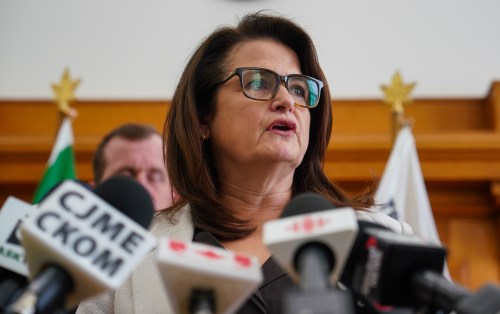
Last week, Jamie Dumont, vice-chairwoman of the board of trustees in the Winnipeg School Division, introduced a motion to undertake an evaluation of all schools named after people and research each historical figure’s resumé.

“We operate, as a school division, under a number of values and, in many cases, we are very much a leader in diversity, equity, inclusion and Indigenous education — so I think it’s important that, as a board, we ensure that our schools and our buildings don’t contradict these values,” Dumont said during a virtual board meeting Sept. 13.

The review will identify whether any buildings are named after individuals with a history of actions that are discriminatory or not in accordance with WSD values, namely: inclusiveness, diversity, reconciliation, and respect for the rights and human dignity of others, or both.

Read
Thursday, Sep. 23, 2021
No Subscription Required

Flags of Treaty One, the Dakota and Métis fly at city hall

Gabrielle Piché 3 minute read Preview
No Subscription Required

Flags of Treaty One, the Dakota and Métis fly at city hall

Gabrielle Piché 3 minute read Wednesday, Sep. 15, 2021

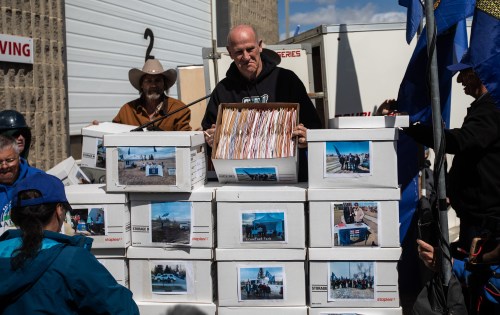
Drumbeats reverberated as four Indigenous leaders rode horseback past the brick-walled restaurants on King Street: it was the beginning of a ceremony to recognize the place of Indigenous people in Winnipeg.

On Wednesday morning, the flags of Treaty One First Nations, the Dakota and the Métis were hoisted at city hall. They'll be there permanently, alongside the flags of Canada, Manitoba and Winnipeg.

"It'll make our people proud that their flag will be flying at city hall," said Sagkeeng First Nation Chief Derrick Henderson. "That is so significant."

Chiefs, representatives of various Indigenous groups and Winnipeg Mayor Brian Bowman spoke at the flag-raising event. Ribbon skirts, headdresses and face masks were abundant among the crowd.

Read
Wednesday, Sep. 15, 2021
No Subscription Required

Set of The Porter a testament to the special connection production has with Winnipeg's Black history

Julia-Simone Rutgers 12 minute read Preview
No Subscription Required

Set of The Porter a testament to the special connection production has with Winnipeg's Black history

Julia-Simone Rutgers 12 minute read Thursday, Sep. 2, 2021

On a rainy Friday evening in Winnipeg’s landmark Nutty Club building, camera crews, grips, food services, hair and makeup teams, stand-ins and actors are spinning about in dance-like organized chaos.

The five-storey candy warehouse — first erected in 1905 and still standing in the shadow of active CP and CN rail lines — has been transformed, pulled back to its turn-of-the-20th-century roots as a set for CBC’s upcoming TV drama The Porter. At each stop along the building’s steep wooden staircase, the team behind Canada’s largest Black-led production is hard at work bringing the roaring ‘20s — and an oft-forgotten story of Black liberation and empowerment — to life.

On one floor, cast and crew block their scene movements, listening raptly to directors, speaking in huddles, donning crisp white shirts and suspenders or gowns, preparing for the crack of the clapperboard.

A floor above, the members of the “video village” tuck on their headphones, lean over screens and warn each other not to move, lest the ceilings shake below.

Read
Thursday, Sep. 2, 2021
No Subscription Required

Group engages community on renaming Wolseley neighbourhood

Malak Abas 4 minute read Preview
No Subscription Required

Group engages community on renaming Wolseley neighbourhood

Malak Abas 4 minute read Monday, Aug. 30, 2021

In 1870, Col. Garnet Wolseley led a military expedition into Manitoba to violently overthrow Louis Riel’s provisional government at the Red River Colony. On Sunday afternoon, a group gathered at Vimy Ridge Park to discuss how to push for the renaming of the neighbourhood that bears his name.

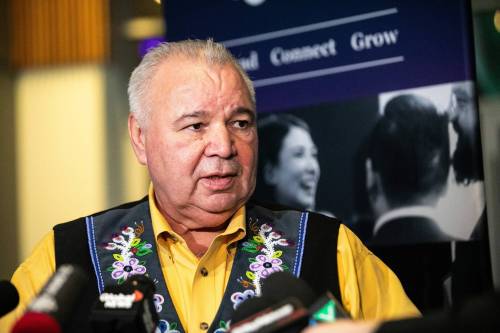
Red River Echoes, a Métis collective that first came together with the purpose of “bringing an alternative voice to what Métis people think in Manitoba” after Manitoba Metis Federation president David Chartrand put out an ad with the Winnipeg Free Press in March in support of the Winnipeg Police Service, put together the rendezvous to take questions and comments community members might have around the growing conversation to rename Wolseley.

"With a lot of names being changed right now, we thought it was a good opportunity,” Red River Echoes member Claire Johnston said. “And Wolseley in particular has a really violent and negative association for Métis people, and also all other people of colour in who live in Winnipeg.”

In the months since the remains of 215 children were found in unmarked graves near a residential school in Kamloops, B.C., calls have been sparked across the country to rename landmarks named after people who had a hand in the colonization of Canada. In Winnipeg, Wolseley isn’t the first instance — calls to rename Bishop Grandin Boulevard due to its namesake’s hand in the residential school system have resulted in consultations and a possible recommendation for its renaming coming to city council this fall.

Read
Monday, Aug. 30, 2021
No Subscription Required

Craig Block link to city’s Black history

Cody Sellar 4 minute read Preview
No Subscription Required

Craig Block link to city’s Black history

Cody Sellar 4 minute read Thursday, Aug. 26, 2021

Above a fruit seller in a small brick building on Main Street, a group of Black railway porters made history.

The Order of Sleeping Car Porters, formed in Winnipeg in 1917, was North America’s first Black labour union. Five years later, they established offices and a meeting hall on the second storey of the building, the Craig Block, at 795 Main St.

Now, the building has hit the market, without any historical status protections or a bronze plaque to commemorate its history.

History writer Christian Cassidy said he’s seen the building, which recently housed retail store Ma’s Fishing, go up for sale once or twice in the past. Each time, he worries someone will buy it and knock it down. It’s one of last buildings that links Winnipeg to the history of its Black communities.

Read
Thursday, Aug. 26, 2021
No Subscription Required

Black History Manitoba's block party opportunity for chefs to share their passion

Melissa Martin 6 minute read Preview
No Subscription Required

Black History Manitoba's block party opportunity for chefs to share their passion

Melissa Martin 6 minute read Monday, Aug. 23, 2021

As a little girl growing up in Jamaica, Patrice Gilman dreamed that one day, she would cook just like Gladys, her grandmother. Everyone around downtown Kingston knew Gladys, and the little restaurant she owned in the area called Southside. Her dish of tripe and beans was famous, and fed famous athletes and hungry kids alike.

Gilman was fascinated by watching her grandmother manage the little kitchen, cooking all on her own, darting between pots of goat or chicken or fish bubbling on any of a dozen wood-fired stoves. Every morning, Gladys rose before the sun to start making lunch, and every day she was sold out of food not long after noon.

Still, she always had a little something for the kids who hung around, the ones who didn’t have enough.

“She was a one-woman show,” Gilman says. “She would feed the whole community. She had nine children, and raised many more children that weren’t her own. She passed away about 13 years ago, but her spirit lives on so strongly in our family’s heart.”

Read
Monday, Aug. 23, 2021
No Subscription Required

Preserving stories of Muslim history in Manitoba

John Longhurst  3 minute read Preview
No Subscription Required

Preserving stories of Muslim history in Manitoba

John Longhurst  3 minute read Friday, Feb. 5, 2021

It was in the early 1900s when one of the first Muslims to live in Manitoba arrived in the province.

His name was Ahmed Awid, and he came from what is now Lebanon — one of perhaps fewer than 1,000 Muslims in Canada at the time.

Awid settled in Brandon, where he married a local woman and established two successful businesses before moving to Edmonton in 1928.

Awid’s story is one of many told in a new book: Muslims in Manitoba: a History of Resilience and Growth.

Read
Friday, Feb. 5, 2021
No Subscription Required

Time to make McClung a pioneer — again

Carl DeGurse 5 minute read Preview
No Subscription Required

Time to make McClung a pioneer — again

Carl DeGurse 5 minute read Saturday, Jan. 25, 2020

A famous Winnipegger enthusiastically promoted selective breeding among humans for the refinement of the species. She championed the forced sterilization of people who were considered “unfit,” meaning people judged as “feeble-minded.”

She left Winnipeg and moved to Edmonton, where she was elected as an MLA and was a main promoter of the Alberta Sexual Sterilization Act, legislation that allowed the sterilization of almost 3,000 people. The victims were disproportionately immigrants and Indigenous people.

By today’s standards, she would be considered a racist.

What do we do about Nellie McClung?

Read
Saturday, Jan. 25, 2020
No Subscription Required

Map-based history of Canada a marvel

Reviewed by Douglas J. Johnston 3 minute read Preview
No Subscription Required

Map-based history of Canada a marvel

Reviewed by Douglas J. Johnston 3 minute read Saturday, Oct. 28, 2017

If you like maps, you’ll like this book; if you like both maps and crisply recounted Canadian history, you’ll love it.

Adam Shoalts is the author of a previous Canadian bestseller, 2015’s Alone Against the North, which recounted his exploration of the muskeg and river wilderness that is the Hudson Bay Lowlands.

The maps of his second book are springboards for his accounts of how this country’s vast expanses were charted.

Shoalts believes maps have been fundamental in shaping our view of Canada. He supports this belief by offering up pivotal moments in our country’s history via stories built around 10 specific maps, most of which, in turn, are the product of specific explorations.

Read
Saturday, Oct. 28, 2017
No Subscription Required

Gripping drama Elle brings outdoor hardship to PTE's indoor stage

Randall King 3 minute read Preview
No Subscription Required

Gripping drama Elle brings outdoor hardship to PTE's indoor stage

Randall King 3 minute read Friday, Feb. 24, 2017

The medium of theatre doesn't necessarily lend itself to a story of survival in the wilderness.

There's a reason The Revenant was a movie and not a Broadway play.

And yet the historical drama Elle, an adaptation of the Governor General’s Award-winning novel by Douglas Glover of the same name by Toronto actress Severn Thompson, manages to be an engaging, gripping piece of work... even in the civilized Prairie Theatre Exchange environs in Portage Place.

Over the course of 90 minutes (without intermission), Thompson connects us to an extraordinary character, based on Marguerite de la Rocque de Roberval, a headstrong young Frenchwoman tantalized to a trip to Canada in 1542 by exotic tales of naked natives and strange customs.

Read
Friday, Feb. 24, 2017
No Subscription Required

Oka at 25, lessons in reconciliation

By Will Braun 5 minute read Preview
No Subscription Required

Oka at 25, lessons in reconciliation

By Will Braun 5 minute read Saturday, Jul. 11, 2015

It's been a generation since July 11, 1990, when a SWAT team piled out of a truck and advanced against a small Mohawk protest on a dirt road in the pine forest outside the Quebec village of Oka. What followed was a 78-day armed siege -- the most violent and consequential clash between indigenous people and the Canadian state in modern times.

What has changed during the past 25 years? What hasn't? And why has there not been another Oka despite repeated warnings about indigenous unrest across the country?

The crisis was sparked by a proposed golf course expansion and condo development that would have turned a Mohawk cemetery at Kanesatake into a parking lot. It represented something much bigger -- a history of inequality and a society divided by race and seething with anger.

The images were jarring. Tanks rolled through quiet communities, white rioters burned effigies of Mohawk warriors, cars carrying Mohawk women and children were pelted with rocks as police stood by, and most iconic of all, a soldier and Mohawk Warrior stared each other down at point-blank range. Generations of tension compressed into the few inches between their steely faces. The nation was on edge.

Read
Saturday, Jul. 11, 2015
No Subscription Required

Uncovering Canada’s Arctic sea battle

By Alexandra Paul 4 minute read Preview
No Subscription Required

Uncovering Canada’s Arctic sea battle

By Alexandra Paul 4 minute read Tuesday, Aug. 6, 2013

In 1697, a single French ship sank a British warship, captured a second ship and chased off a third ship.

It was an audacious act of war that nearly turned into a suicide mission, but the Battle of Hudson Bay is a forgotten chapter in Canada's history.

That could change with an intrepid group's plan to film an educational video in Churchill this summer for a curriculum kit aimed at high school students. And if they can find the ship that sank, it would be a bonus.

Three hundred years ago, an imperious colonial aristocrat pointed his sails north from New France (modern Quebec), departing with a fleet of wooden sailing ships.

Read
Tuesday, Aug. 6, 2013
No Subscription Required

Hardship, history live in rock of ancient fort

By Bill Redekop 5 minute read Preview
No Subscription Required

Hardship, history live in rock of ancient fort

By Bill Redekop 5 minute read Saturday, Jul. 13, 2013

CHURCHILL -- Samuel Hearne, English explorer and governor of Fort Prince of Wales in the late 1700s, claimed the beavers he let waddle around the stone fort made better pets than some cats and dogs.

"I kept several," he wrote in his journal, "... til they became so domesticated as to answer to their names...and follow as a dog would do; and they were as pleased at being fondled as any animal I ever saw."

You had to do something, after all, stuck in a fort made out of quartzite rock, on a desolate point overlooking Hudson Bay, buffeted by northern gales and frequent blizzards and surrounded by sea ice two-thirds of the year.

Fort Prince of Wales, built in the mid-1700s, is testament to the extraordinary mettle of those first immigrants, mostly Scots from the Orkney Islands, who plied the fur trade for the Hudson's Bay Co., and the First Nations people who traded with them.

Read
Saturday, Jul. 13, 2013
No Subscription Required

Canadian political culture grew out of War of 1812

Reviewed by Graeme Voyer 3 minute read Preview
No Subscription Required

Canadian political culture grew out of War of 1812

Reviewed by Graeme Voyer 3 minute read Saturday, Jun. 16, 2012

THE War of 1812 -- a conflict between Britain and the United States, much of it contested on Canadian soil -- was a decisive event in Canadian history.

The U.S. proved unable to conquer and annex Britain's Upper and Lower Canadian colonies, thus ensuring that Canada would develop as an independent nation within the British imperial orbit.

This summer marks the 200th anniversary of the outbreak of the war. Recent years have witnessed a flurry of scholarship on the conflict -- Ontario historian Wesley Turner's 2011 biography of British general Isaac Brock comes to mind -- but it is difficult to imagine a better introduction to the War of 1812 than this account by York University professor of political science James Laxer.

This military and diplomatic history of the War emphasizes the roles played by two inspired leaders on the British and Canadian side: Brock, the commander of the forces of Upper Canada and the head of its civil government; and his ally Tecumseh, a Shawnee chief who joined the British to fight the Americans who were systematically encroaching on native land.

Read
Saturday, Jun. 16, 2012

Woman of strength

Marsha McLeod 7 minute read Preview

Woman of strength

Marsha McLeod 7 minute read Yesterday at 7:32 AM CDT

Over her life, Christina Gladys Henderson was known by a few names.

She was born Aug. 6, 1948, as Teenie Cook, to Adam Cook and Violet Quill, and lived her early years in Sapotaweyak Cree Nation, on the shore of Lake Winnipegosis, about 600 kilometres northwest of Winnipeg. She would later adopt the name Tina, which most people called her, and later, Christina. In marriage, she would trade the surname Cook for Henderson.

Over her 77 years, however, one part of her identity did not change: Henderson would hold fast to her first language, Swampy Cree, despite more than a decade spent in residential schools — institutions that routinely punished and humiliated First Nations children for speaking their own languages.

“I know one of the biggest highlights for her was when APTN aired a hockey game in Cree,” said Henderson’s niece, Crystal Laborero. “I don’t even know who was playing, but to be honest, I don’t think she cared either.”

Read
Yesterday at 7:32 AM CDT
No Subscription Required

Religion on census needs a rework, group says

John Longhurst 5 minute read Preview
No Subscription Required

Religion on census needs a rework, group says

John Longhurst 5 minute read Yesterday at 2:01 AM CDT

Did you get the long form of the census? If you did, then you are among the 25 per cent of Canadians who had a chance to tell the government about your religious identity.

The federal government has been collecting information about religion in Canada since 1871; it’s one of the oldest efforts to track religion in the world.

Since that time, the religious landscape in Canada has changed a lot. Up until the 1960s, the country was mainly Christian, with small numbers of Jewish, Muslim, Hindu, Sikh and Buddhist Canadians.

The 2026 census lists over 200 religious groups, just over half of them Protestant and Catholic. The rest are from a wide variety of other religious traditions, including six streams of Buddhism, 10 different Jewish groups, seven kinds of Islam and five different forms of Indigenous spirituality. People can also choose from Wiccan, Satanist, Rastafarian and New Age groups, among others.

Read
Yesterday at 2:01 AM CDT
No Subscription Required

New essay collection explores menace of far-right movements in Canada

Reviewed by Joseph Hnatiuk 4 minute read Preview
No Subscription Required

New essay collection explores menace of far-right movements in Canada

Reviewed by Joseph Hnatiuk 4 minute read Yesterday at 2:00 AM CDT

“Democracy is at stake and Canada is not immune to its demise,” states Miriam Edelson, editor of this timely anthology, warning that right-wing extremism, energized by memes and trolls permeating digital spaces, is heralding social and political change and affecting how current generations view the slow, often cumbersome democratic process.

Edelson’s well-researched observations are supported by 18 different contributors comprised of an array of like-minded academics, researchers and concerned activists who collectively alert readers to the extremist messaging that is altering some long-standing expectations of responsible governance.

Edelson’s social activism was honed by personal experiences while living in Toronto and working with the Canadian labour movement, spawning a literary legacy of personal essays and commentaries published by the Toronto Star, Globe & Mail and Literary Review. Her earlier book, My Journey with Jake: A Memoir of Parenting and Disability (2000) remains a poignant reminder that society functions best when individuals share a common purpose of looking out for one another.

In a concise foreword to Confronting the Resurgent Right, University of Manitoba professor and award- winning Free Press columnist Niigaan Sinclair similarly reminds readers that “far right movements built on hate,” like those earlier thrust upon Indigenous people and still targeting Jews, Muslims and other identifiable groups, inexorably lead to “racism, violence, and genocide.”

Read
Yesterday at 2:00 AM CDT

Human rights panel accuses Canada of genocide against Indigenous population

Erika Morris, The Canadian Press 5 minute read Preview

Human rights panel accuses Canada of genocide against Indigenous population

Erika Morris, The Canadian Press 5 minute read Updated: Yesterday at 9:45 AM CDT

MONTREAL - An international panel of human rights experts has accused Canada of committing genocide against its Indigenous population after a week of hearings in Montreal.

The Permanent Peoples' Tribunal was mandated to look at missing and disappeared children and unmarked graves at Canada’s residential school sites, as well as the forced sterilization of Indigenous women, through the lens of international law.

The panel of seven judges said Canada historically adopted a series of policies that they deemed were crimes against humanity with genocidal intent, including the residential schools, which were in operation for over 150 years. The last residential school closed in 1996.

Survivors at the hearings held onto each other and wiped away tears as three tribunal members read out the decision.

Read
Updated: Yesterday at 9:45 AM CDT

Ruling against Aboriginal title on private land is allowed to stand by high court

Wolfgang Depner and Nono Shen, The Canadian Press 6 minute read Preview

Ruling against Aboriginal title on private land is allowed to stand by high court

Wolfgang Depner and Nono Shen, The Canadian Press 6 minute read Friday, May. 29, 2026

A New Brunswick ruling that Aboriginal title cannot be declared over private land has been allowed to stand by the Supreme Court of Canada, giving British Columbia an avenue to win its appeal in the landmark Cowichan Tribes case, B.C.'s attorney general said Thursday.

Niki Sharma said the high court's refusal to hear an appeal by the Wolastoqey First Nation in the case involving Aboriginal title in New Brunswick gives B.C. a "clear path" for an appeal in the Cowichan case, which has cast doubt on the primacy of private property rights.

"When it's the same legal issues that we are dealing with here, I think that bodes well for our arguments, and the appeals that we are seeking in B.C.," she said.

The mayor of Richmond, B.C., meanwhile said private property owners in the Cowichan Tribes title area should "breathe a little easier" in light of the Supreme Court of Canada's ruling.

Read
Friday, May. 29, 2026
No Subscription Required

The quiet power — and necessity — of Oseredok

Stephen Borys 6 minute read Preview
No Subscription Required

The quiet power — and necessity — of Oseredok

Stephen Borys 6 minute read Thursday, May. 28, 2026

At a moment when Ukraine sits at the centre of global political attention, one of North America’s most important Ukrainian cultural institutions continues to operate quietly in Winnipeg’s Exchange District.

For many Winnipeggers, Oseredok remains one of the city’s hidden treasures — preserving an extraordinary collection of Ukrainian and Ukrainian-Canadian art, artifacts and archives within its five-storey building on Alexander Avenue.

Originally constructed in 1912 as the British and Foreign Bible Society Building and designed by Winnipeg architect William Bruce, the structure itself reflects layers of immigration, faith and history embedded within the city.

Yet few people fully understand its scale and significance.

Read
Thursday, May. 28, 2026

Survivors gather at former residential school site near Brandon

Tessa Adamski 5 minute read Preview

Survivors gather at former residential school site near Brandon

Tessa Adamski 5 minute read Thursday, May. 28, 2026

BRANDON — Marjorie Prince had tears in her eyes as she searched to find her and her brothers’ names among more than 3,000 orange flags pegged in the ground at the site of the former Brandon Indian Residential School.

The flags represent children who never returned home as well as survivors.

The woman from Dakota Tipi First Nation said it was her second time returning to the site since she was taken from her family at seven years old with her three brothers.

She couldn’t recall what year she attended the school or how long she was there.

Read
Thursday, May. 28, 2026

Manitoba leads in protecting human rights

Thomas S. Axworthy 5 minute read Wednesday, May. 27, 2026

It is perhaps little noticed in our province — as we grapple with the cost of living, homelessness and the impending threat of forest fires — that the NDP government of Premier Wab Kinew has emerged as a leading defender of the Charter of Rights and Freedoms, even as the governments of Quebec, Alberta and Saskatchewan are doing their best to weaken it.

Issues of human rights and the role of the Charter were at the forefront of a recent four-day hearing before the Supreme Court of Canada on the legality of Quebec’s secularism law, Bill 21.

The law prohibits public sector employees — including teachers, police officers and government lawyers — from wearing religious symbols such as turbans, crosses, hijabs and yarmulkes while at work. Bill 21 forces religiously observant individuals to choose between their faith and employment in public institutions.

It is a clear violation of Section 2 of the Charter, which guarantees freedom of conscience, religion and association.

Attorney General Sharma says B.C. supports company’s request to reopen Cowichan case

Wolfgang Depner, The Canadian Press 2 minute read Preview

Attorney General Sharma says B.C. supports company’s request to reopen Cowichan case

Wolfgang Depner, The Canadian Press 2 minute read Wednesday, May. 27, 2026

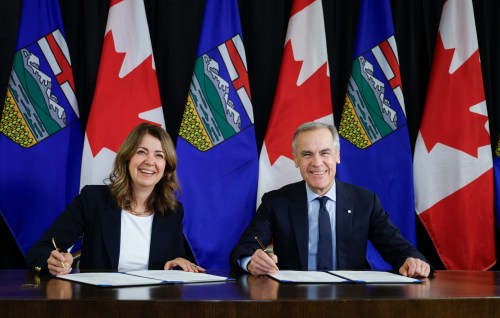
VICTORIA - British Columbia's attorney general says it is rare to reopen a court case as significant as the landmark Cowichan Tribes title decision, but the government supports an effort to do so by the largest private property owner in the title area.

Niki Sharma says Montrose Properties will be able to bring forward details about how it has been affected by the ruling that Aboriginal title is a "senior interest" compared to fee-simple title.

Montrose owns about 120 hectares in the overall title area of 300 hectares granted by the judge, but the court didn't hear from private landowners during the initial case, so the company is asking a B.C. Supreme Court judge in Victoria to reopen the case.

The same judge hearing Montrose's arguments through to Wednesday ruled in August that the Cowichan First Nation has Aboriginal title over the land, that the granting of private titles by government unjustifiably infringed on the nation's title, and that Crown and city titles on the site are defective and invalid.

Read
Wednesday, May. 27, 2026

Manitoba bill would reduce availability of flavoured vapes; one group wants more

Steve Lambert, The Canadian Press 3 minute read Preview

Manitoba bill would reduce availability of flavoured vapes; one group wants more

Steve Lambert, The Canadian Press 3 minute read Wednesday, May. 27, 2026

WINNIPEG - The Manitoba government plans to greatly reduce the number of locations where flavoured vaping products can be sold, but one group says the idea does not go far enough and lags behind efforts in many other provinces.

A bill introduced in the legislature Tuesday would forbid the sale of such products in businesses in urban areas that allow people under 18 to enter. The measure would not apply in rural areas.

The NDP government said the aim is to help reduce the risk that minors might see the products, be enticed by the flavouring, and get hooked.

"We know that (flavoured vapes) is a gateway for kids in particular (to) choosing more significant — like tobacco, cigarettes — substances later on," Health Minister Uzoma Asagwara said.

Read
Wednesday, May. 27, 2026