Food and Nutrition
Please review each article prior to use: grade-level applicability and curricular alignment might not be obvious from the headline alone.

Move over Big Mac: McDonald’s Canada taps beverage craze with new drinks line-up
5 minute read Preview Wednesday, May. 20, 2026
Syrup season in swing
2 minute read Preview Tuesday, Apr. 21, 2026
High fuel prices driving up shipping costs for northern grocers
6 minute read Preview Tuesday, May. 12, 2026
AI-driven app like a grain market ‘analyst in your pocket’
4 minute read Preview Thursday, Apr. 16, 2026
Gatorade, inventor of the sports drink, is getting a rebrand targeting non-athletes
5 minute read Preview Thursday, May. 7, 2026
Walmart is repackaging its Great Value brand to reflect changing consumer habits
4 minute read Preview Thursday, May. 7, 2026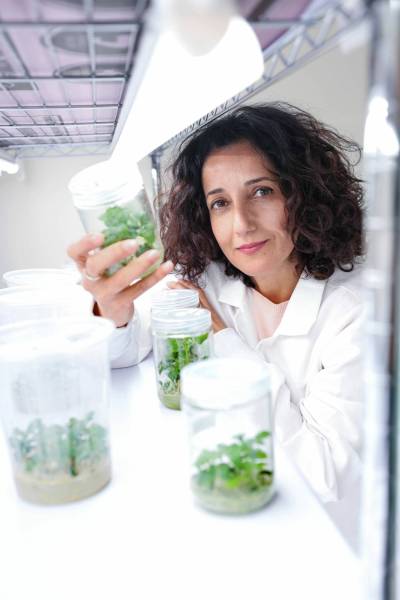
Crop-enhancement firm eyes potato prosperity
5 minute read Preview Tuesday, Apr. 14, 2026Few food innovations as polarizing as genetic modification
4 minute read Saturday, Apr. 11, 2026Most of us have been eating foods derived from genetically modified crops for a generation or so, and so far, none of the ills attributed to modern food systems have been traced back to their use.
Except, perhaps our propensity towards overeating.
Since their introduction in the mid-1990s, genetically modified crops have taken over nearly half of the global area sown to soybeans, canola and corn.
The foods from these varieties, which are most often genetically modified to allow farmers to use herbicides that kill weeds but not the crop, are the same as traditional varieties in every measurable way.

Food is food regardless of where it comes from
4 minute read Preview Wednesday, Apr. 8, 2026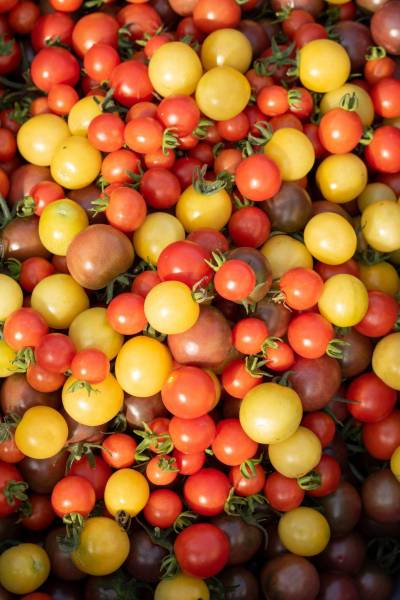
Home gardeners have new way to share bumper crops
5 minute read Preview Tuesday, Apr. 7, 2026
Hershey says it will shift back to classic recipe for all Reese’s products after criticism
3 minute read Preview Saturday, Apr. 25, 2026
Boy Kibble craze a soul-destroying approach to maxxing meal plans
4 minute read Preview Saturday, Mar. 28, 2026
Shopping bill is a good pre-emptive strike
4 minute read Preview Friday, Mar. 20, 2026
Most Canadians want to ban or regulate algorithmic pricing, poll shows
5 minute read Preview Friday, Apr. 24, 2026
Proposed legislation targets predatory grocery pricing
3 minute read Preview Tuesday, Mar. 17, 2026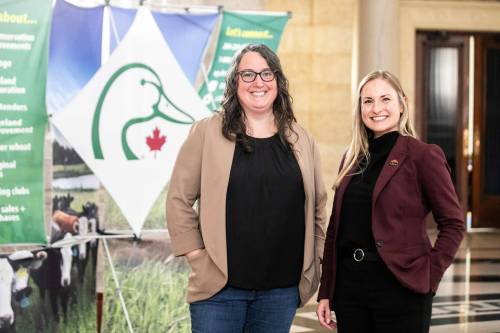
Ducks Unlimited provides $1-M pasture for farming research
4 minute read Preview Monday, Mar. 16, 2026
Maple 2.0: Quebec syrup-makers turn to automation and expansion as demand grows
6 minute read Preview Friday, Apr. 24, 2026
Ukrainian Guide to Winnipeg directory puts focus on area businesses, services run by Ukrainians
5 minute read Preview Saturday, Mar. 14, 2026Supporting oversized contributions of bite-sized farms
4 minute read Saturday, Mar. 14, 2026Small-scale food producers in Manitoba may be oceans away from their counterparts in Africa, but they share a common need for extension services relevant to their size.
Extension has historically been pivotal to helping farmers keep abreast of the ever-changing dynamics of agricultural production.
Yet when it comes to getting information on how to produce food better, whether they are in it to feed themselves or their neighbours, small farmers fall through the cracks. Industry and government extension services are heavily tilted towards helping large farmers to improve productivity.
Of the world’s roughly 570 million farms, 0.1 per cent exceeding 1,000 hectares (2,471 acres) manage half of all the world’s agricultural land to produce 16 per cent of the globe’s food energy. Farms of 124 acres or more grow 55 per cent of the world’s cereals, pulses, sugar and oilseed crops, the UN-FAO reports.

Province takes aim at Sobeys over competition-killing property controls
3 minute read Preview Thursday, Mar. 12, 2026
Muslim community breaks fast at Grand Iftar to raise funds for people in Sudan, Gaza
3 minute read Preview Monday, Mar. 9, 2026
Farmers again caught in geopolitical crossfire
4 minute read Preview Saturday, Mar. 7, 2026